Swiss Virtual Institute for Solar Science (SVISS) is a collaboration for science and technology which promotes and advances national and international cooperation in Switzerland for solar physics and related sciences.
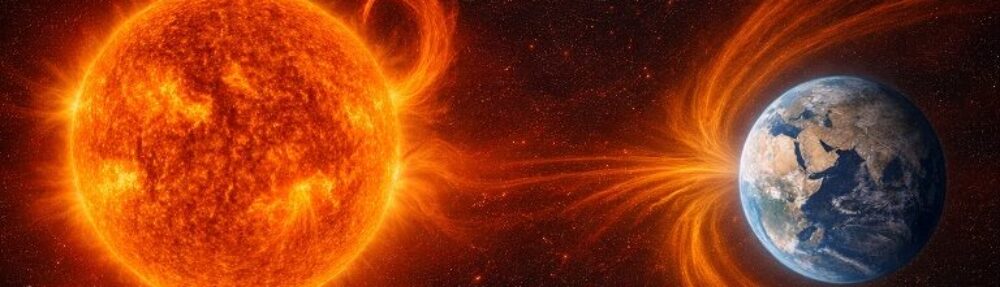
Solar physics is a discipline with relations to several other branches of science because of the uniqueness of the Sun: it is the only star that can be explored in great detail on spatial and temporal scales. Being the main energy source of our solar system, the Sun affects everything in our cosmic neighborhood.
The Sun is often called the “Rosetta Stone of astrophysics”, since many astrophysical processes and tools that are needed for exploring and understanding the more distant universe are initially discovered, explored, and tested in the astrophysical laboratory that the Sun provides. Examples are atomic physics and radiatiation-transfer tools that are needed for analyzing astrophysical spectra, plasma physics, dynamo, and particle acceleration processes that also occur in various forms elsewhere in the universe, magnetic variability and plasma structuring, heating processes and the generation of stellar winds, and asteroseismology to determine the internal structure of stars.
The Sun with its solar wind, eruptions and coronal mass ejections governs the violently fluctuating space weather, which is a major factor to reckon with for all manned space travel. The magnetic variability of the Sun also influences its brightness at various electromagnetic frequencies (from gamma- and X-rays to UV, visible, infrared, microwave and radio), that affects the Earth’s magnetosphere, ionosphere, ozone layer and the global climate. For the quantitative understanding of global climate change and the man-made greenhouse effect one needs to properly identify and sort out the component in the global climate system that is linked to the variable solar radiation. This hot topic has led to collaborations between solar physicist and climatologists.
Historical milestones of Swiss solar physics
- Historical Foundations: In 1849, Prof. Rudolf Wolf (ETHZ) introduced the Zurich Sunspot Number. Today, this vital work is continued by Specola Solare Ticinese and IRSOL, with the support by MeteoSwiss and with data archived at ETHZ and distributed via the SILSO data center in Belgium.
- Pioneering Space Missions: From Prof. Johannes Geiss’s solar wind experiment on the Apollo mission (1969) to the current STIX instrument on ESA’s Solar Orbiter (FHNW, Prof. Samuel Krucker), Switzerland remains at the forefront of solar space-based observations.
- High-Precision Technology: The ZIMPOL polarimetric system (ETHZ, IRSOL, SUPSI) revolutionized the field with polarimetric precision down to 10−6, uncovering hidden solar magnetism. This technology has also generated spin-offs in exoplanet research and biopharmaceutics.
- Academic Growth: Recognizing the critical importance of solar research, Switzerland has recently established new professorships at ETHZ, USI, and UNIBE.